A children's book review blog
Bookish Dad
Honest reviews from a guy who has read The Very Hungry Caterpillar approximately one billion times.

New this week: I read 6 Elephant & Piggie books in one sitting. My feelings are complicated. → Read the review

Filter by age:
📚
⭐ Editor's Pick
Featured Review

Matilda by Roald Dahl: Still the Greatest Children's Book Ever Written and I Will Die on This Hill

My daughter (8) picked this off the shelf because the cover looked "old and interesting." Within two chapters she was refusing to go to bed. I consider this an absolute parenting win and also a logistical nightmare. Here is my review.

★★★★★
5.0 / 5.0 — "A masterpiece. Obviously."
Read the full review →
Advertisement728 × 90 Leaderboard

Elephant & Piggie: We Are in a Book! (And Five Others I Read Back-to-Back at 7pm on a Wednesday)

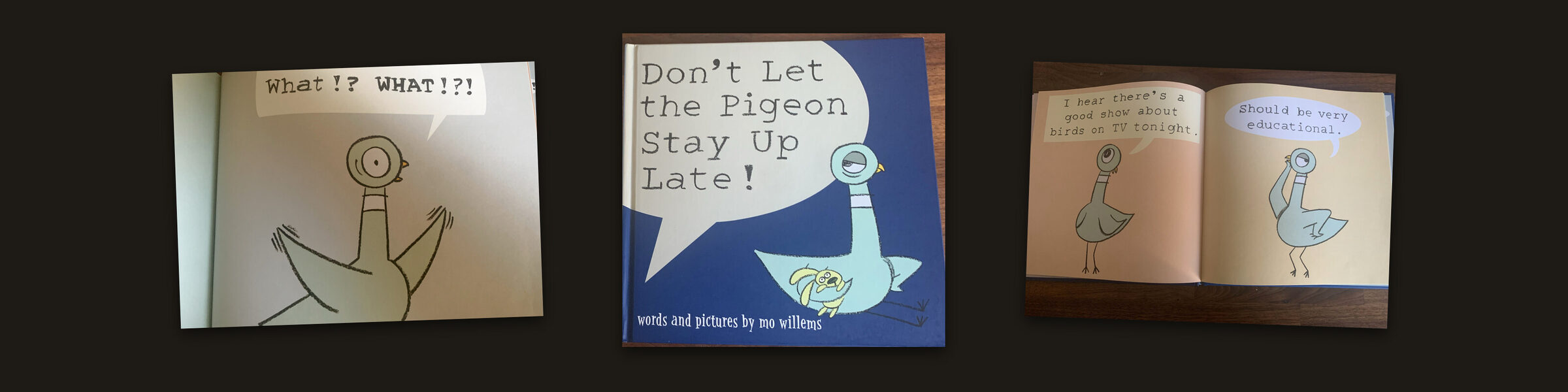
Mo Willems is a genius. I've been saying this for three years and I'll keep saying it until someone listens. These books are the one exception to the rule that reading aloud is exhausting. The voices are genuinely fun to do. My 4-year-old did a spit-take at the "BANANA" joke. A spit-take. She is four.

★★★★★
Full review →

Goodnight Moon: A Forensic Analysis of Why This Book Has Broken Me

We have read Goodnight Moon every single night since October 2021. That is, conservatively, 1,200 times. I have opinions. I have questions. Why is there a bowl of mush just sitting there? Who is the old lady? Why does she say nothing? What does she know? This is my review, and also my manifesto.

★★★★★
Full review →

Magic Tree House #1: Dinosaurs Before Dark (Or: How I Accidentally Started a 50-Book Commitment)

I didn't read Magic Tree House as a kid — I was more of a Choose Your Own Adventure guy — so I came to this completely cold. What I found was a book engineered to be a portal drug for chapter books, and I mean that as the highest possible compliment. My 7-year-old finished the first one and immediately demanded the second. They're now 23 books in. I have a reading problem and it's contagious.

★★★★
Full review →

Where the Wild Things Are: Ranking the 10 Best Children's Books from the 80s and 90s That Still Hold Up

I grew up in the era of Sendak, Silverstein, and Seuss — three names that sound like a law firm that specializes in whimsy. Here's my definitive ranking of the books I read as a kid that I'm now genuinely thrilled to read to mine. The nostalgia is strong. The opinions are stronger.

★★★★★
Full review →

Pete the Cat: I Love My White Shoes — A Good Cat, An Adequate Book, and a Song That Will Live in Your Head Forever

Here's my honest position on Pete the Cat: he's fine. He's fine! The philosophy is good — things go sideways, you roll with it, cool cool cool. As a dad, I endorse this message. But the song gets in your head and it STAYS there. I woke up at 3am last Tuesday singing "I love my white shoes." My wife looked genuinely scared.

★★★★★
Full review →

Charlotte's Web: I Cried. My Kid Didn't. I'm Not Okay With This.

I read this book 30 years ago and cried then too, so I thought I'd be prepared. I was not prepared. My 9-year-old finished it, looked up, said "that's sad," and went to go play Minecraft. Meanwhile I was sitting there fully processing grief. E.B. White is cruel and wonderful. Full review incoming.

★★★★★
Full review →

Matilda by Roald Dahl: Still the Greatest Children's Book Ever Written and I Will Die on This Hill

★★★★★
Book: Matilda
Author: Roald Dahl
Illustrator: Quentin Blake
Published: 1988
Age range: 8–12 (my 8-year-old inhaled it)
Pages: 240
Read-aloud time: About 8 evenings if you're doing chapters like a normal person; 2 nights if your kid refuses to stop

I want to tell you something about 1991. I was seven years old, my mom handed me a paperback with a little girl on the cover, and I disappeared for a weekend. Not in the metaphorical sense where adults say "she was really engaged." I mean I was gone. I ate cereal and read. I watched approximately zero Saturday morning cartoons. I just read Matilda, cover to cover, twice, because once wasn't enough to believe it was real.

So when my daughter — same age, same age — pulled this off the shelf because, as she put it, "the girl on the cover looks like she's planning something," I had approximately one second to decide whether to play it cool or burst into tears. I played it cool. Mostly.

What it's about (for the three of you who somehow don't know)

Matilda Wormwood is a genius born into a family of absolute morons who don't deserve her. Her father is a crooked car salesman. Her mother is obsessed with bingo and television. Her brother is a bowl of wet cardboard in human form. Matilda, by contrast, has taught herself to read by age three, worked through the entire children's section of her local library by four, and is currently onto Dickens, Hemingway, and Kipling at five.

She starts school. Her teacher, Miss Honey, is basically a saint. Her headmistress, Miss Trunchbull, is a former Olympic hammer-thrower who picks children up by their ears and throws them over fences. And also: Matilda discovers she can move things with her mind.

"The books transported her into new worlds and introduced her to amazing people who lived exciting lives." — Roald Dahl knew exactly what he was doing with that line.

What makes this book a masterpiece

Here's the thing about Roald Dahl that nobody talks about enough: he was absolutely furious on behalf of children. Every adult villain in his books isn't just bad — they're contemptuous. The Wormwoods don't just neglect Matilda; they think she's dim. They think this because they are themselves dim, and can't conceive of a mind that works the way hers does. This is the specific cruelty he spent his career documenting.

My 8-year-old, on page 12, looked up from the book and said: "Her parents are the worst people I've ever read about." Which, yes. Correct. That's the point, that's the whole point, you are already getting it.

Reading to her in the evenings, doing the Trunchbull voice (which I have perfected, I will not be taking notes on this), watching her face cycle through indignation and delight — this is what I thought parenting was going to be like before I discovered what actually consumes most of parenting.

The other thing Dahl gets exactly right: Matilda isn't just smart. She's morally smart. She understands fairness in an almost painfully clear way. She punishes her father for being a crook. She punishes Miss Trunchbull for terrorizing children. She does it with precision and patience. There's something deeply satisfying about a children's book that says: yes, you are right that this is unfair, and yes, competence and cleverness can fix it.

The 80s-90s kids lit question: does it hold up?

100%. No caveats. There's nothing dated about this book except the absence of smartphones, which honestly makes it better. Matilda goes to the library. The library is a refuge. The librarian is kind. These are values I want my kids to absorb directly into their bones.

Compare this to some of the books I've reviewed recently where the message is delivered like a TED talk — it's okay to be different! everyone has value! believe in yourself! — and then everyone hugs. Dahl never lectures. He just shows you a girl who reads, and thinks, and acts, and wins. The message is structural, not stated. This is hard to do and he makes it look effortless.

Reading it aloud

I do a different voice for every character and I'm not embarrassed about this. The Trunchbull is a kind of strangled Germanic bellow that I've developed over two readings now. Miss Honey gets a gentle, slightly apologetic delivery. Mr. Wormwood gets a nasal whine that my daughter has started doing back at me when I tell her to clean her room, which I deserved.

The pacing is perfect for reading in chapters. Each one ends with just enough momentum to make the "one more chapter" ask completely reasonable. We did "one more chapter" approximately 14 times. I don't regret any of them.

The Verdict
Matilda — Roald Dahl
★★★★★

A genuine masterpiece. Not "great for a kids book." Great, full stop. Funny, furious, moving, and morally clear without being preachy. If your kid is between 7 and 10 and hasn't read this, the solution is to hand it to them today and get out of the way.

Writing quality
Read-aloud fun
Holds up on re-reads
Kid engagement
Message / values
Dad survival rate

Elephant & Piggie: We Are in a Book! (And Five Others I Read Back-to-Back at 7pm on a Wednesday)

★★★★★
Book: We Are in a Book! (Elephant & Piggie series)
Author / Illustrator: Mo Willems
Published: 2010 (series runs 2007–2016)
Age range: 3–6, possibly 2 if they're into it
Pages: 57 (it's a picture book, pages are thick)
Read-aloud time: 6 minutes per book. You will read more than one.

Let me tell you about my relationship with Mo Willems. I did not grow up with Mo Willems. Mo Willems published his first Pigeon book in 2003, when I was in college and had bigger problems. I came to him entirely through my children, which is the humbling experience of discovering a genius after everyone else already knew.

My first Elephant & Piggie book was thrust into my hands by my then-3-year-old with the energy of someone handing you a document that will change your life. "Dad. Read THIS one." She had, I think, already read it approximately 30 times. She wanted to watch me read it for the first time. She was waiting for my reaction.

I read it. I laughed. She looked like she'd won something.

What Mo Willems understands that a lot of children's books don't

Here is the thing about "We Are in a Book!" specifically: it is a book about being a book, and my 4-year-old understood this completely and found it cosmically funny. Gerald the elephant realizes they're in a book. He realizes a reader is reading them right now. Piggie wants to make the reader say something. They make the reader say "BANANA." The book ends, they panic about the book ending, they tell you to read it again.

This is absurdist postmodern humor. For four-year-olds. And it works. It works completely.

"BANANA." — The funniest single word my 4-year-old has ever encountered in print. She tested it on strangers at the grocery store. They were not prepared.

The whole series operates on this level. Willems trusts children to get jokes. Not dumbed-down jokes with telegraphed punchlines, but actual jokes with timing and surprise and escalation. Gerald and Piggie have a real friendship — they misunderstand each other, they get jealous, they apologize, they work through things. The emotional beats are real. Kids recognize them because they live them.

The read-aloud experience

I have done the voices so many times that I now do them automatically, involuntarily, the same way I default to a British accent when reading anything remotely posh. Gerald is a medium-high, vaguely anxious tenor with a tendency to over-emote. Piggie is pure enthusiasm, slightly squeaky, always sure. These characters have colonized a corner of my brain that I will never get back.

Here is my honest ranking of the series books we own, by how much I enjoy reading them aloud: (1) We Are in a Book, (2) I Will Surprise My Friend, (3) Should I Share My Ice Cream, (4) I Am Going, (5) Waiting Is Not Easy. I do not regret any of these purchases. I have bought them as gifts for approximately six families. I am an Elephant & Piggie evangelist and I am not sorry.

Compared to the other books in my daughter's rotation

My 4-year-old has a complicated reading canon right now. It includes some absolute classics (we're doing Frog and Toad, which is its own separate masterpiece, review coming) and some things that I believe were designed by people who have never met a child (I will not name names but you know who you are, Caillou). Elephant & Piggie sits at the top. Always at the top.

The thing about a good picture book is whether it has a life after the 40th reading. Some books become wallpaper. These don't. Gerald's existential spirals remain funny. Piggie's optimism remains charming. The friendship remains real. I don't know how he did it but Willems built something with a genuinely long half-life and parents notice that even when kids don't.

The Verdict
Elephant & Piggie Series — Mo Willems
★★★★★

Essential. If you have a 3–6 year old and don't own at least two of these, stop reading this and go fix that. Start with "We Are in a Book!" or "Should I Share My Ice Cream?" Buy them in a bundle. You'll thank me.

Writing quality
Read-aloud fun
Holds up on re-reads
Kid engagement
Message / values
Dad survival rate

Goodnight Moon: A Forensic Analysis of Why This Book Has Broken Me

★★★★★
Book: Goodnight Moon
Author: Margaret Wise Brown
Illustrator: Clement Hurd
Published: 1947 (1947!! still in print!!)
Age range: 0–3. Maybe 4 if they're into routine.
Pages: 30
Read-aloud time: 4 minutes. You will read it more than once.

I want to be clear that I do not dislike Goodnight Moon. Three stars is not a bad score. Three stars means: I respect what this book is, I understand its cultural importance, and I also have some questions that haunt me at 11pm when I should be asleep.

Goodnight Moon was published in 1947. It has never been out of print. It has sold something like 48 million copies. It is, by any metric, one of the most successful children's books in history. And as someone who has now read it an estimated 1,200 times, I want to discuss some things.

First: the cow jumping over the moon

There is a picture of a cow jumping over the moon hanging in this bunny's bedroom. Why? Is this decorative? Is it aspirational? Is it meant to normalize cows clearing celestial bodies? I read this line every single night for 400 nights before I actually looked at the picture and thought about it, and now I can't stop thinking about it.

My 4-year-old, when I brought this up: "It's just a picture, Dad." She's right. I know she's right. I cannot stop thinking about the cow.

"Goodnight nobody." — Three years in, this line still hits me differently depending on how the day went. Margaret Wise Brown was doing something real here and I'm not sure I'm mentally stable enough for it at 8:15pm.

Second: the old lady whispering "hush"

Who is she? She's just there. Knitting. In this bunny child's bedroom. Whispering "hush." We do not get her name. We do not get her backstory. She just... whispers. And then in the final pages she's gone. Where did she go? Why was she there? I am not trying to be difficult. I have genuinely thought about this woman for three years.

When I asked my daughter who she thought the old lady was, she said, without hesitation: "That's the grandma." I said, how do you know? She said, "She just is." And then she went to sleep, fully satisfied, leaving me holding a 30-page board book with more questions than when I started.

What the book genuinely does well

Here's what I'll say without irony: the rhythm works. "In the great green room / there was a telephone / and a red balloon." Read that aloud right now. There's something in the cadence that actually slows you down. After approximately 1,000 readings it started working on me too. By "goodnight air" I am genuinely less tense. By "goodnight noises everywhere" I am ready for a cup of tea and some quiet.

Also: the room gets darker as you go. Page by page. Margaret Wise Brown and Clement Hurd built a dimmer switch into a 30-page board book in 1947. This is a legitimate design achievement and I respect it completely.

And my kids loved it. Both of them. Completely. My older one grew out of it around age 3 and moved on, but those years were real. The younger one is still in it. We are still doing it nightly. The routine is the point and the point works.

The Verdict
Goodnight Moon — Margaret Wise Brown
★★★★★

A legitimate classic that has earned its reputation. Three stars from me means "I have been broken by the repetition but I understand this is my problem, not the book's." Buy it. Use it. Make peace with the cow.

Writing quality
Read-aloud fun
Holds up on re-reads
Kid engagement
Message / values
Dad survival rate

Hi. I'm just a dad who reads.

And who has opinions about what he reads. Very strong opinions. About children's books.

📖

I live in the Pacific Northwest with my wife, my 8-year-old daughter, and my 4-year-old son. I work in software during the day, which means I spend a lot of time staring at a screen doing very adult, very reasonable things, and then at 7:30pm I sit on the edge of a bed and read picture books in a series of increasingly embarrassing voices.

I grew up in the 80s and 90s on a steady diet of Roald Dahl, E.B. White, Beverly Cleary, Gary Paulsen, Shel Silverstein, and Choose Your Own Adventure. I read constantly as a kid, to the point where my mom instituted a "no reading at the dinner table" rule that I found profoundly unjust. I still find it unjust. It was a good rule. I've instituted the same rule for my own kids.

When my daughter was born and we started building her book shelf, I discovered two things: (1) there are a staggering number of children's books being published every year, and (2) a meaningful percentage of them are not worth your time or your child's time. There are also genuinely great books — some new, some classics — that I'd never heard of and found only by accident or recommendation.

So I started writing reviews. Not as a professional. Not as someone with a literature degree or any particular credential. Just as someone who reads every night, has read a lot of books twice, three times, a hundred times, and has developed strong feelings about which ones reward that repetition and which ones make you want to "accidentally" misplace them behind the couch.

What I'm looking for in a children's book

Three things, basically:

I try to approach every book on its own terms. A board book for 18-month-olds and a chapter book for 11-year-olds are doing completely different jobs. I'm not comparing them to each other; I'm asking whether each one does its specific job well.

On nostalgia

I grew up with certain books that I loved deeply. Some of them are still great. Some of them are... fine, and I loved them because I was eight. I try to be honest about which is which. I will tell you when nostalgia is doing the work in my rating. I will try not to let it do too much work.

I will probably fail at this when it comes to Roald Dahl, who I consider objectively perfect and will not be argued with about.

Disclosures

I buy all the books I review. I don't accept free books from publishers. This site is supported by display advertising (Google AdSense), which pays approximately enough to cover a Starbucks order, but it keeps the lights on. Advertisers have no input on what I review or what I say about books.

If you've got a book you think I should review — classics, new releases, anything — I'm at the contact form below. I do actually read those.

Send me a book recommendation →

Privacy Policy

Bookish Dad ("I," "me," "this site") is a personal blog about children's books. This policy explains what data is collected when you visit bookishdad.com and how it's used.

Google AdSense and Advertising

This site uses Google AdSense to display advertisements. Google uses cookies to serve ads based on prior visits to this site and other sites. You can opt out of personalized ads at Google's Ad Settings. Third-party ad vendors, including Google, may use cookies to serve ads based on your browsing history.

Analytics

I use Google Analytics to understand how many people are visiting, which reviews they're reading, and how they found the site. This data is anonymous and aggregated. I don't know who you are; I just know someone from Seattle read the Matilda review twice.

Newsletter / Email

If you subscribe to email updates, I collect your email address. I use it to send you a short notification when I publish a new review. I don't sell it, share it, or use it for anything else. You can unsubscribe any time from the bottom of any email I send.

Cookies

This site uses cookies primarily through Google AdSense and Google Analytics. You can disable cookies in your browser settings. The site will still work if you do.

Children's Privacy

Ironic for a children's book site to need this, but: this site is not directed at children and does not knowingly collect any data from children under 13.

Contact

Questions? Use the contact form. Or email [email protected].

Say Hi

Have a book I should review? Disagree strongly with something I said? (About Pete the Cat, probably.) Want to argue about whether Roald Dahl's best book is Matilda or The BFG? (It's Matilda.) I'm here.

I read every message. I respond to most of them, usually within a day or two, occasionally faster if it's a good book recommendation or a spirited argument. You can also reach me directly at [email protected].

I'm especially interested in: